
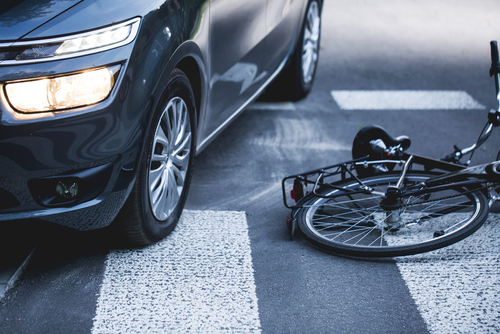
Hit in a Bike Lane in Los Angeles? Here’s What You Need to Know
You did everything right. You stayed in the bike lane, followed the rules of the road, and a driver still hit you. Now you’re hurt, your bike is wrecked, and you’re left wondering who’s responsible and what comes next. If that’s where you are, take a breath — you have rights, and California law is on your side.
This post explains how bike lane crashes happen in Los Angeles, the laws that protect you, and what you may be able to recover. Here’s what you’ll learn:
- The most common ways bike lane collisions happen in LA
- How California law protects cyclists and decides fault
- What damages an injured rider can pursue and the deadline that applies
Let’s start with how these crashes actually unfold.
How Bike Lane Collisions Happen in Los Angeles
Bike lanes are supposed to keep riders safe, but in a city this congested, they often put cyclists right next to fast-moving and distracted traffic. Understanding how these crashes happen helps you see where fault may lie.
Dooring
“Dooring” happens when a driver or passenger in a parked car opens a door directly into the path of a cyclist. With little time to react, the rider slams into the door or swerves into traffic to avoid it. Under California law, people are required to check before opening a door into traffic — including into a bike lane.
Turning Vehicles
Many collisions occur when a driver turns across a bike lane — a right turn in front of a cyclist (the “right hook”) or a left turn into an oncoming rider. Drivers frequently fail to check the bike lane before turning, or misjudge how fast a cyclist is moving.
Sideswipes and Unsafe Passing
Drivers who drift into the bike lane, pass too closely, or merge without looking can clip a rider. California’s “Three Feet for Safety” law requires drivers to give cyclists at least three feet of clearance when passing.
Distracted Driving
A driver looking at a phone instead of the road may never see a cyclist until it’s too late. Distraction is a leading factor in bike lane crashes across LA’s busy corridors.
Takeaway: Most LA bike lane crashes trace back to a driver’s failure to look — when turning, passing, or opening a door.
California Laws That Protect Cyclists
California treats bicycles seriously under the law, and several rules exist specifically to keep riders safe. Knowing them helps you understand why a driver may be at fault.
- Vehicle Code § 21209 generally prohibits drivers from operating a motor vehicle in a bike lane except in limited situations, like parking or turning.
- Vehicle Code § 21760 (the Three Feet for Safety Act) requires drivers to leave at least three feet when passing a cyclist, and to slow down if that’s not possible.
- Vehicle Code § 22517 prohibits opening a car door into traffic when it’s unsafe — the core of dooring liability.
- Vehicle Code § 21200 gives cyclists the same rights and responsibilities as drivers, meaning you’re entitled to the protections of the road.
These laws matter because they establish a clear standard of care. When a driver violates one of them and causes a crash, that violation can serve as strong evidence of negligence.
Takeaway: California’s Vehicle Code gives cyclists specific, enforceable protections — and a driver who breaks those rules is often at fault.
How Negligence and Comparative Fault Apply
Most bike lane injury claims come down to negligence — the failure to use reasonable care. To hold a driver responsible, you generally need to show four things:
- Duty — the driver owed you a duty to drive safely.
- Breach — the driver failed to meet that duty (for example, turning across the bike lane without looking).
- Causation — that failure caused the crash.
- Damages — you suffered real harm as a result.
What If You Were Partly at Fault?
You may worry that something you did — maybe you weren’t wearing a helmet, or you were riding slightly fast — will sink your claim. In California, it usually won’t.
California follows pure comparative negligence. Under this rule, you can still recover even if you were partly to blame; your compensation is just reduced by your percentage of fault. For example, if your total damages were $100,000 and you were found 20% at fault, you could still recover $80,000.
This matters because insurers often try to pin extra blame on cyclists to shrink what they pay. A shared-fault argument rarely ends your case.
Takeaway: Partial fault reduces your recovery in California; it almost never erases it.
Who May Be Liable for Your Crash
Identifying every responsible party is one of the most important parts of a bike lane case, because it can affect how much compensation is available.
- The driver. In most cases, the at-fault motorist is the primary liable party — whether for dooring, an unsafe turn, an illegal pass, or distraction.
- A vehicle passenger. In a dooring crash, the person who opened the door may share responsibility.
- A municipality or government entity. If a dangerous road design contributed — a poorly marked bike lane, a sudden lane that disappears, missing signage, or a hazardous pothole — a city or other public entity may be partly liable.
- An employer. If the driver was working at the time (a delivery or rideshare driver, for example), their employer may share liability.
Claims against government entities are different and far less forgiving on timing — they often require a formal claim within just six months. That’s one reason acting quickly matters so much.
Takeaway: Liability may extend beyond the driver to passengers, employers, or even a city responsible for unsafe road design.
What Damages an Injured Cyclist Can Recover
A bike lane crash often costs far more than a hospital bill. California law lets you seek compensation for the full scope of your losses, which may include:
- Medical expenses — emergency care, surgery, imaging, and rehabilitation
- Future medical costs — ongoing treatment for lasting injuries
- Lost wages — income missed while you recover
- Lost earning capacity — reduced ability to work going forward
- Pain and suffering — the physical and emotional toll of the crash
- Bike and equipment damage — repair or replacement of your bicycle, helmet, and gear
Cyclists often suffer serious injuries — broken bones, head trauma, road rash, and long-term nerve or joint damage — because there’s so little between a rider and the road. The severity and permanence of your injuries tend to drive what a claim is worth.
Takeaway: Your claim can cover much more than medical bills — including lost income, future care, and your damaged bike and gear.
A Composite Example: Meet Daniel
Daniel is not a real client. He’s a composite — a realistic blend of the kinds of cases attorneys see — created to show how a bike lane claim can come together.
Daniel was commuting through LA in a marked bike lane when a driver made a sudden right turn across his path to reach a parking spot. He couldn’t stop in time, struck the side of the car, and was thrown from his bike. He suffered a fractured wrist and a concussion, and his bike was destroyed.
Here’s how his situation took shape:
- Establishing fault. The driver turned across the bike lane without yielding, a clear breach of the duty to look before turning.
- Comparative negligence. The insurer argued Daniel was riding too fast, but the driver’s failure to yield accounted for the overwhelming share of fault.
- Documented damages. Daniel kept his medical records, the repair estimate for his bike, and a log of his missed workdays and lingering symptoms.
- Acting in time. Because he had his situation reviewed promptly, his right to pursue compensation stayed intact.
No single fact carried Daniel’s case. It was the combination — a clearly at-fault driver, solid documentation, and a timely claim — that gave him a strong path forward.
Takeaway: A well-documented crash with a clearly at-fault driver can support a strong claim, even when the insurer tries to shift blame.
The Two-Year Deadline You Can’t Miss
California sets a firm time limit on injury claims. Under the California personal injury statute of limitations, you generally have two years from the date of the crash to file a personal injury lawsuit. Miss that window, and you can lose the right to pursue compensation entirely — no matter how serious your injuries.
There’s a critical exception: if a government entity may be responsible — say, for a dangerous bike lane design — you typically must file a formal claim within six months. That much shorter deadline catches many injured cyclists off guard.
Acting early also protects your evidence. Photos of the scene, the position of the bike lane, surveillance footage, witness memories, and the damaged bike itself all fade or become harder to obtain over time.
Try this: If you’ve been hurt in a bike lane, photograph everything, keep your damaged bike and gear, and treat the legal clock as already running.
Takeaway: You generally have two years to file — but possible government liability can shrink that to six months, so act fast.
Why Choose Walch Law
A bike lane crash can leave you facing painful injuries, mounting bills, a wrecked bike, and an insurance company eager to blame you for your own harm. You shouldn’t have to handle that alone while you’re trying to heal.
At Walch Law, we help injured cyclists and their families across Los Angeles and throughout California pursue claims against those responsible for their harm. We investigate how the crash happened, identify every party who may share fault — including a city if road design played a role — work to preserve critical evidence, document the full scope of your losses, and push back when insurers downplay your injuries.
We work on a contingency fee basis. You pay nothing out of pocket, and we only collect a fee if we recover compensation for you. There’s no financial risk in finding out where you stand.
Get Your Free Consultation Today
If a driver hit you in an LA bike lane, here’s what to remember:
- Dooring, turning vehicles, sideswipes, and distraction cause most bike lane crashes.
- California law gives cyclists strong, specific protections on the road.
- Comparative negligence means partial fault usually reduces, not erases, your recovery.
- Deadlines are firm — two years in most cases, but as little as six months if a government entity is involved.
Contact Walch Law today for a completely free, confidential consultation. Tell us what happened, and we’ll give you an honest assessment of your case and the next steps that make sense for you.
Call today or reach out online to get started. 1-844-999-5342


Comments
There are no comments for this post. Be the first and Add your Comment below.