
LA Road Conditions and El Niño: Why Accidents Will Rise This Winter
Quick answer: Poor Los Angeles road conditions, including potholes, cracked pavement, flooded streets, mudslides, and debris, cause crashes and injuries every year. This winter could be worse. Forecasters expect a strong El Niño through early 2027, which raises the odds of above-average rain in Southern California. Heavy rain turns existing road defects into serious hazards. When a dangerous road causes your injury, the City of Los Angeles, Los Angeles County, or Caltrans may be legally responsible. You generally must file a formal government claim within six months of your injury. Most other personal injury lawsuits in California must be filed within two years.
Los Angeles drivers know the feeling. Your front tire drops into a pothole you couldn’t see, and the steering wheel jerks in your hands. On a dry afternoon, that might mean a bent rim. On a dark, rain-soaked night, it can mean a crash, a motorcycle going down, or a cyclist thrown into traffic.
Poor road conditions in Los Angeles already contribute to accidents across the region. With a strong El Niño building heading into winter, those hazards are likely to multiply.
This guide explains:
- The most common dangerous road conditions in LA and how they cause accidents
- Why El Niño could make this winter especially risky on local roads
- When the City of LA, LA County, or Caltrans can be held liable, and the strict deadlines that apply
Common Dangerous Road Conditions in Los Angeles
Los Angeles has thousands of miles of streets, plus freeways, canyon roads, and coastal highways. Many are aging, heavily used, and behind on repairs. These are the defects that most often lead to injuries.
Potholes
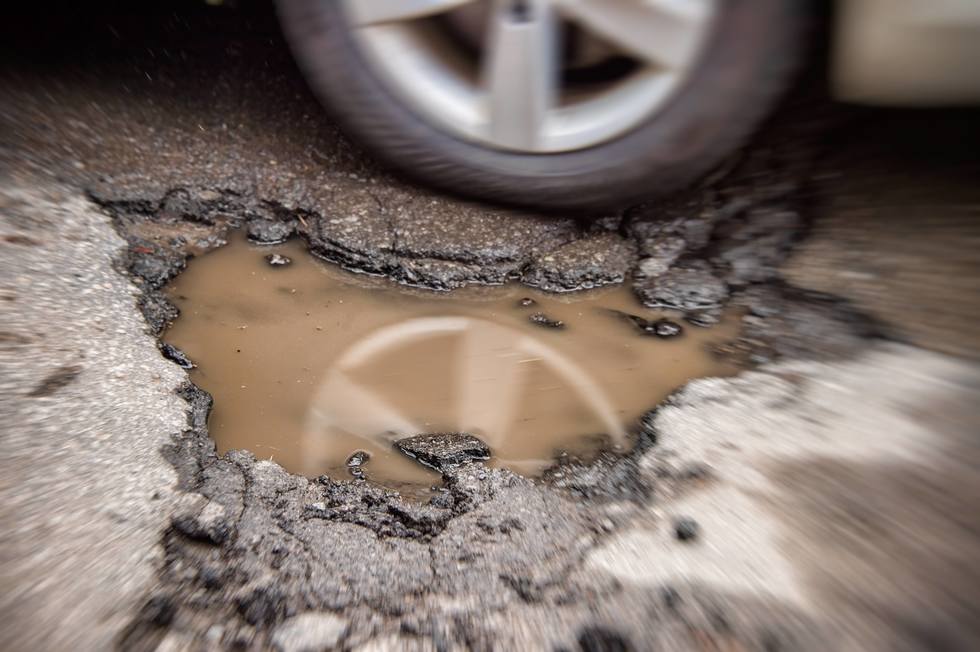
Potholes are the most familiar road hazard in LA. They form when water seeps through cracks and weakens the base beneath the asphalt. Heavy traffic then breaks the weakened surface apart.
Potholes cause accidents in several ways:
- Drivers swerve suddenly to avoid them and hit other cars
- Tires blow out or rims crack, causing a loss of control
- Motorcycles and bicycles hit them and throw riders to the pavement
- Water fills them during storms, hiding their depth completely
Cracked and Uneven Pavement
Cracks, buckled asphalt, and uneven road seams may look minor. For anyone on two wheels, they aren’t. A raised seam can catch a bicycle tire and flip a rider over the handlebars.
On sidewalks, tree roots lift concrete slabs and create sharp edges that trip pedestrians. Los Angeles has a long history of damaged sidewalks, and many neighborhoods still have broken stretches waiting for repair.
Flooded Roads and Poor Drainage
When storm drains clog with trash, leaves, and sediment, water pools in the road. Low-lying intersections, underpasses, and freeway on-ramps can flood quickly during heavy rain.
Flooded roads lead to:
- Hydroplaning, when tires lose contact with the pavement and ride on water
- Hidden hazards, such as potholes and debris under the surface
- Stalled vehicles, which create obstacles for other drivers
- Sudden braking and swerving, which cause rear-end and sideswipe crashes
Mudslides and Debris Flows
Hillside and canyon roads face a different kind of danger. Heavy rain loosens soil and sends mud, rocks, and debris onto the road. Pacific Coast Highway, Topanga Canyon, Malibu Canyon, and the roads through the Santa Monica and San Gabriel Mountains are especially vulnerable.
Burn scars make this risk much worse. The January 2025 fires in Pacific Palisades and Altadena stripped vegetation from hillsides that normally hold soil in place. Burned slopes can produce dangerous debris flows for several years, even during moderate storms.
Road Debris and Construction Hazards
Debris isn’t limited to mud. Fallen tree limbs, rocks, loose gravel, and items dropped from trucks all pose risks. Construction zones add their own dangers, including:
- Loose or poorly secured steel trench plates
- Missing or confusing lane markings
- Unmarked drop-offs between new and old pavement
- Inadequate warning signs or lighting at night
Faded Markings, Broken Signals, and Missing Signs
Not every road defect is in the pavement. Worn crosswalk paint, burned-out streetlights, malfunctioning traffic signals, and missing stop signs can all set the stage for a collision. These problems become far more dangerous in rain and darkness.
Takeaway: Many LA road hazards exist year-round. Rain is what turns them from annoying into deadly.
How El Niño Could Make LA Road Conditions Worse
El Niño is a climate pattern marked by warmer-than-normal ocean water in the central and eastern Pacific. It shifts weather patterns around the world. For Southern California, a strong El Niño often means a wetter winter.
What Forecasters Expect This Winter
Federal forecasters report that El Niño continues to strengthen, with a strong-to-very strong event likely through January to March 2027. Winter outlooks favor above-average precipitation across California, particularly in Southern California.
El Niño doesn’t guarantee a stormy season. Some strong El Niño winters have brought less rain than expected. But it does raise the odds of repeated storms. Los Angeles still remembers the 1997–98 El Niño, which brought major flooding, mudslides, and road damage across the region.
Why Rain Multiplies Road Hazards
Heavy rain doesn’t just create new hazards. It makes existing ones worse:
- Potholes multiply. Water seeps into every crack, and new potholes can appear almost overnight after a big storm.
- Existing defects hide. A pothole filled with water looks like a harmless puddle.
- Drains fail. After a long dry stretch, storm drains are often clogged. The first heavy rains can overwhelm them.
- Oil rises to the surface. The first rain after dry weather lifts built-up oil from the pavement, making roads unusually slick.
- Hillsides give way. Saturated soil, especially on burn scars, can slide onto roads with little warning.
- Visibility drops. Rain, glare, and early winter darkness make every defect harder to see.
Repair Crews Fall Behind
After a series of storms, road crews face a backlog of reports. Potholes and damaged pavement may sit unrepaired for weeks. Temporary patches can wash out in the next storm.
That delay matters legally. When an agency knows about a hazard and doesn’t fix it or warn drivers within a reasonable time, it may be liable for resulting injuries.
Takeaway: If El Niño delivers the storms forecasters expect, LA’s existing road problems will likely spread faster than crews can repair them.
Who Is Liable for Accidents Caused by Poor Road Conditions?
When a dangerous road causes a crash, the responsible party is often a government agency. California law allows injured people to bring claims against public entities, but those claims follow special rules.
Which Agency Maintains the Road?
Identifying the right agency is one of the first steps in any road defect case. In the Los Angeles area, responsibility usually falls to one of these:
- City of Los Angeles: Maintains most surface streets, sidewalks, and storm drains within city limits through its street services and public works departments.
- Los Angeles County: Maintains roads in unincorporated areas, such as Altadena, East Los Angeles, and many canyon communities. The county also manages major flood control channels.
- Caltrans: Maintains state highways and freeways, including the 405, the 101, the 10, the 5, and state routes such as Pacific Coast Highway.
- Other cities: Santa Monica, Beverly Hills, Pasadena, Glendale, Long Beach, and other independent cities maintain their own streets.
A single crash scene can involve more than one agency. A freeway off-ramp may belong to Caltrans while the intersection at the bottom belongs to the city.
What You Must Prove in a Dangerous Road Claim
Under California Government Code Section 835, a public entity may be liable for a dangerous condition of public property. You generally need to show:
- The road or property was in a dangerous condition when you were injured
- The dangerous condition caused your injury
- The condition created a reasonably foreseeable risk of the kind of injury you suffered
- Either a public employee created the condition through negligence, or the agency knew or should have known about it in time to fix it or warn the public
Actual and Constructive Notice
Notice is often the heart of a road defect case.
- Actual notice means the agency knew about the hazard. A resident’s pothole report through MyLA311 or a prior complaint can prove this.
- Constructive notice means the hazard existed long enough, and was obvious enough, that the agency should have discovered it through reasonable inspections.
Repair records, prior accident reports, 311 complaints, and photos showing how long a defect existed can all help prove notice.
Defenses Government Agencies Raise
Public agencies have legal defenses that private defendants don’t. They may argue:
- Weather immunity: California law generally shields agencies from liability for the effects of weather alone. However, this defense may not apply when weather combines with a separate defect, such as a clogged drain or an unrepaired pothole.
- Design immunity: Agencies may claim the road was built according to an approved plan.
- Lack of notice: Agencies may argue they had no reasonable way to know about the hazard.
- Minor defect: For small sidewalk cracks, agencies may argue the defect was too trivial to be dangerous.
An experienced attorney knows how to investigate and respond to these arguments.
Private Parties Who May Share Fault
Not every road hazard belongs to the government. Other responsible parties may include:
- Construction contractors who leave unsafe trench plates, debris, or poorly marked work zones
- Utility companies that dig up roads and fail to restore the surface properly
- Adjacent property owners in some sidewalk cases, especially where they caused or worsened the damage
- Other drivers who were speeding, distracted, or driving too fast for wet conditions
California follows a pure comparative fault system. Even if you were partly responsible, you can still recover damages reduced by your share of fault.
Takeaway: Government agencies can be held accountable for dangerous roads, but these cases require strong evidence of notice and careful handling of legal defenses.
Types of Road Defect Accidents Walch Law Helps With
Poor road conditions put everyone at risk. Walch Law represents people injured in many types of accidents caused by dangerous roads and sidewalks in Los Angeles.
Car Accidents
Potholes, flooding, and debris can cause drivers to lose control, blow a tire, hydroplane, or swerve into another lane. Common road-related car crashes include:
- Single-vehicle crashes into poles, walls, or medians
- Head-on and sideswipe collisions after a sudden swerve
- Rear-end crashes when a driver brakes hard for a flooded section
- Multi-car pileups on wet freeways
Motorcycle Accidents
Motorcyclists are among the most vulnerable road users when pavement fails. A pothole, raised seam, gravel patch, or slick of oil that a car can roll over may throw a rider to the ground. Lane splitting, which is legal in California, can also put riders directly over uneven lane seams and road debris.
Motorcycle crashes often cause fractures, road rash, spinal injuries, and traumatic brain injuries.
Bicycle Accidents
Cyclists ride close to the curb, where drainage grates, cracked asphalt, and storm debris tend to collect. A bike tire can drop into a pothole or catch in a gap and send a rider into traffic.
Bicycle accidents caused by road defects frequently involve head injuries, broken collarbones, wrist fractures, and shoulder injuries, even when the rider wears a helmet.
Pedestrian Accidents
Pedestrians face road hazards in two ways. Broken sidewalks and flooded crosswalks can force them into the street. Drivers who swerve around potholes or lose control on wet roads can also strike people walking nearby.
Faded crosswalk markings, broken pedestrian signals, and dark streetlights make crossings even more dangerous in winter.
Slip and Fall and Trip and Fall Injuries
Not every road defect injury involves a vehicle. Walch Law also helps people hurt by:
- Uplifted or cracked sidewalks
- Broken curbs and missing curb ramps
- Potholes in crosswalks and parking areas
- Mud, standing water, or debris on public walkways
- Uncovered or damaged storm drains and utility covers
Older adults are especially at risk. A single fall can cause a broken hip, a wrist fracture, or a head injury that takes months to heal.
Takeaway: Whether you were driving, riding, or walking, a dangerous road condition may give you the right to compensation.
What to Do After a Road Defect Accident in Los Angeles
Road hazards often get repaired soon after an accident, especially once an agency learns someone was hurt. Fast action protects your evidence.
- Get medical care right away. Some injuries, like concussions and internal injuries, don’t show symptoms immediately.
- Call 911. A police or CHP report documents the scene and the road condition.
- Photograph the hazard. Take close-up and wide shots of the pothole, crack, flooding, or debris. Place a common object, like a shoe or water bottle, next to it to show size and depth.
- Record the exact location. Note street names, the nearest cross street, landmarks, and your direction of travel. Drop a pin on your phone’s map.
- Document weather and lighting. Note whether it was raining, dark, or foggy, and whether streetlights were working.
- Get witness information. Collect names and phone numbers from anyone who saw the accident.
- Keep damaged property. Save your bike, helmet, tires, rims, and torn clothing. These can become key evidence.
- Look for cameras. Nearby businesses and homes with doorbell cameras may have captured the crash.
- Avoid recorded statements. Talk with an attorney before speaking to any insurer or agency representative.
- Contact the best Los Angeles dangerous road conditions lawyer quickly. The government claim deadline is short, and building a notice case takes time.
Common mistake to avoid: Many people assume they have two years to act, as with most injury claims. If a government agency is involved, waiting even a few months can put your case at risk.
Critical Deadlines: The 6-Month Government Claim Rule
California’s deadlines for claims against government agencies are much stricter than for other injury claims.
The Six-Month Government Claim Deadline
Before you can sue the City of Los Angeles, LA County, Caltrans, or another public entity, you must file a formal written claim with that agency. For personal injury and property damage, the claim generally must be filed within six months of the date of injury.
The agency then has time to accept or reject the claim. If it rejects the claim in writing, you generally have six months from the date of that notice to file a lawsuit. If the agency never responds, other deadlines apply.
If you miss the six-month deadline, you may be able to request permission to file a late claim within one year. These requests aren’t guaranteed, so it’s far better to file on time.
The Two-Year Personal Injury Statute of Limitations
For claims against private parties, such as another driver, a construction contractor, or a utility company, California generally allows two years from the date of injury to file a personal injury lawsuit.
Many road defect cases involve both public and private defendants. That means the shorter government deadline usually controls how quickly you need to act.
Damages Available in Road Defect Cases
Injured people may be able to recover:
- Medical bills, surgery, and rehabilitation costs
- Future medical care
- Lost wages and reduced earning capacity
- Pain and suffering
- Emotional distress
- Vehicle, bicycle, and other property damage
- Wrongful death damages for surviving family members
Punitive damages are not available against government agencies in California. They may be available against a private party whose conduct was especially reckless.
Takeaway: The six-month clock starts on the day of your injury. Don’t wait until after the rainy season to get legal help.
How Walch Law Helps Road Defect Accident Victims
Taking on a government agency is different from filing a typical insurance claim. Agencies have their own legal teams, special immunities, and strict procedures. You need a law firm that knows how these cases work.
At Walch Law, we:
- Identify the correct agency responsible for the road, sidewalk, or drain where you were hurt
- File your government claim on time and handle every procedural requirement
- Investigate notice through 311 complaints, repair logs, inspection records, and prior accident reports
- Preserve evidence before the hazard is repaired or washed away
- Work with engineers and accident reconstruction experts to show how the defect caused your injury
- Pursue every liable party, including contractors, utility companies, and negligent drivers
- Handle all communication with agencies and insurers so you can focus on recovery
We handle road defect cases on a contingency fee basis. You pay no attorney fees unless we recover compensation for you.
Hurt by a Dangerous LA Road? Talk to Walch Law Today
Los Angeles road conditions were already a problem. A strong El Niño could bring more potholes, more flooding, more mudslides, and more injuries this winter. When a city, county, or state agency fails to keep public roads reasonably safe, injured people have the right to hold them accountable.
Whether you were hurt in a car crash, thrown from a motorcycle or bike, struck as a pedestrian, or injured in a fall on a broken sidewalk, the clock is already running. The six-month government claim deadline leaves little room for delay.
Contact Walch Law today for a free, confidential consultation. We’ll review what happened, identify who’s responsible, and move quickly to protect your claim.
Frequently Asked Questions
Can I sue the City of Los Angeles for a pothole accident?
Yes, in many cases. If the city knew or should have known about the pothole and failed to repair it or warn drivers within a reasonable time, it may be liable. You must first file a formal government claim, usually within six months of your injury.
How does El Niño affect road safety in Los Angeles?
A strong El Niño raises the odds of a wetter winter in Southern California. Heavy rain creates new potholes, worsens existing cracks, overwhelms storm drains, and triggers mudslides, especially near burn scars. Rain also reduces visibility and makes roads slick.
Who is responsible for accidents on LA freeways caused by road hazards?
Caltrans maintains California’s freeways and state highways, including Pacific Coast Highway. If a freeway defect caused your crash, Caltrans may be liable. Other drivers or contractors may also share fault.
Can the government avoid liability because it was raining?
Agencies may argue that weather alone caused the accident. However, that defense generally doesn’t protect an agency when a separate defect, such as a clogged drain or unrepaired pothole, made the weather conditions more dangerous.
What if I tripped on a broken sidewalk in Los Angeles?
You may have a claim against the city, an adjacent property owner, or both, depending on who caused or controlled the defect. Photograph the sidewalk, measure the height difference if possible, and contact an attorney quickly.
How long do I have to file a claim for a road defect accident?
Claims against government agencies generally must be filed within six months of your injury. Claims against private parties, such as another driver or a contractor, usually have a two-year deadline.
Does reporting a pothole to 311 help my case?
Yes. Prior 311 reports can show the agency had notice of the hazard. If you’re injured, your attorney can request records of earlier complaints about the same location.
Can I recover compensation if I was partly at fault?
Yes. California’s pure comparative fault rule lets you recover damages even if you share some blame. Your award is reduced by your percentage of fault.
How much does it cost to hire Walch Law?
Nothing up front. Walch Law handles road defect cases on a contingency fee basis, so you pay no attorney fees unless we recover compensation for you. CALL NOW 1-844-999-5342


Comments
There are no comments for this post. Be the first and Add your Comment below.