
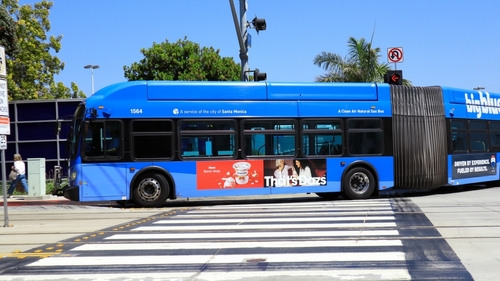
What Families Should Know After a Fatal Santa Monica Metro Bus Accident
Losing a loved one in a sudden transit accident leaves families with grief, confusion, and a flood of questions that no one prepared them to answer. When the vehicle involved belongs to a public agency like Metro, those questions get even harder, because the rules for these cases are different from ordinary accident claims.
This guide explains, in plain language, what families generally need to understand after a fatal bus accident involving a public transit agency in California. We use a recent Santa Monica incident to illustrate how these situations unfold. Our goal is not to assign blame or predict any outcome. It is to help grieving families understand the process, the evidence, and the deadlines that can shape their legal options.
What News Reports Say Happened
According to a KTLA news report, a woman was killed on Friday afternoon after she apparently moved underneath a stopped Metro bus in Santa Monica. The report states that police and fire crews responded around 2 p.m. to Main Street and Ocean Park Boulevard following reports of a collision involving a pedestrian and a Metro bus.
Per the reporting, investigators said surveillance video from a nearby business helped clarify what happened. Police said in a news release that “preliminary investigation indicates the Metro bus was stopped when the pedestrian moved underneath the bus,” and that the pedestrian was struck and fatally injured as the bus pulled away. Metro said the bus was operating on the westbound 33 Line. Authorities reported the bus operator stayed at the scene and cooperated, and that there was “no indication of impairment or distraction on the part of the operator.”
It is important to be clear: these are preliminary, reported facts attributed to investigators and news coverage. Investigations evolve. Early statements can change as more evidence comes in. Nothing here is a finding of fault against anyone.
Why Fatal Transit Cases Are Legally Different
Most people assume a wrongful death claim works the same regardless of who caused the harm. That assumption can be costly when a public transit agency is involved.
Public agencies operate under a separate set of legal rules in California. Claims against them often require a formal government claim before any lawsuit can move forward, and the deadlines are typically much shorter than the standard wrongful death timeline. Understanding this difference early can mean the difference between preserving your rights and losing them entirely.
So what does this mean for a family? It means the clock may already be running, and the steps you take in the first weeks matter.
How Wrongful Death Investigations Work
A fatal Los Angeles transit accident usually triggers more than one investigation at the same time. Each one looks at the event from a different angle.
The Police and Coroner Investigation
Law enforcement gathers physical evidence, interviews witnesses, reviews available video, and works to reconstruct what happened. The coroner’s office determines the cause of death and confirms the victim’s identity. These findings often shape the public narrative early on.
The Transit Agency’s Internal Review
Agencies like Metro typically conduct their own internal review after a fatality. This may include operator interviews, vehicle inspections, and analysis of onboard systems. These records are not always made public, but they can become critical in a civil claim.
The Civil Investigation
A wrongful death attorney conducts an independent investigation focused specifically on liability and damages. This is separate from the criminal and internal reviews. The civil investigation asks whether negligence contributed to the death and what evidence supports or undermines that conclusion.
By the end of this stage, a family should understand that the official “preliminary” account is only the starting point, not the final word.
What Evidence Matters Most
In a fatal bus accident, the strength of any potential claim depends heavily on evidence, and much of that evidence is time-sensitive. Here is what tends to matter most:
- Surveillance and security video. Footage from nearby businesses, traffic cameras, and onboard bus cameras can be the most objective record of what happened. This footage can be overwritten or deleted, so preserving it quickly is essential.
- Operator statements and records. What the driver reported, their training history, hours on duty, and any prior incidents can all be relevant.
- Onboard data and bus systems. Many transit buses record speed, braking, door operation, and mirror or camera data that can help reconstruct the sequence of events.
- Scene evidence. Photographs, measurements, vehicle position, sightlines, and the physical layout of the stop all help establish what each party could see and do.
- Transit agency maintenance and safety records. Records about the specific bus, its equipment, and the agency’s safety procedures can reveal whether protocols were followed.
- Witness accounts. Passengers, pedestrians, and other drivers may have seen details that video does not capture.
A skilled attorney often sends formal preservation requests early to stop critical evidence from disappearing before it can be reviewed.
Government Claim Deadlines May Apply
This point deserves its own section because it is where families most often lose their rights without realizing it.
When a claim involves a public entity, California law generally requires filing a formal government tort claim before a lawsuit can proceed. For many injury and wrongful death matters, that deadline is six months from the date of the incident — far shorter than the standard wrongful death statute of limitations.
There can be narrow exceptions, and the specific agency and facts affect how the rules apply. But families should never assume they have plenty of time. Missing the government claim deadline can permanently bar a claim, regardless of how strong it might otherwise have been.
The practical takeaway: if a public transit agency is involved, talk to an attorney quickly so the right deadlines are identified for your specific situation.
Comparative Fault and Factual Disputes
It would be misleading to suggest that every fatal transit accident leads to a successful claim. These cases can be genuinely difficult, and the facts matter enormously.
In the Santa Monica incident, the reported account suggests the pedestrian moved underneath a stopped bus before it pulled away. If accurate, that fact pattern raises real questions about responsibility. California follows a comparative fault system, which means responsibility can be divided among the parties involved. A victim’s own actions may reduce or, in some cases, defeat a recovery.
That said, comparative fault works both ways. The same set of facts can still raise legitimate questions, such as:
- Could the operator have seen the pedestrian before pulling away?
- Were mirror checks, cameras, or safety procedures followed?
- Did the bus’s equipment function properly?
- Were there warning systems or protocols designed to prevent exactly this kind of tragedy?
The honest answer is that no one can determine fault from a preliminary news report. That determination requires a full, independent investigation, which is exactly why an early legal evaluation matters.
Practical Next Steps for Families
If your family is facing a loss like this, these steps can help protect your options while you grieve:
- Preserve everything you have. Keep any photos, names of witnesses, news links, and official reports in one place.
- Request that evidence be preserved. Surveillance and onboard video can disappear quickly. An attorney can send formal preservation letters fast.
- Be cautious with statements. If an agency representative or insurance adjuster contacts you, you are not required to give a recorded statement before speaking with a lawyer.
- Track the timeline. Note the exact date of the incident, since government claim deadlines may be measured from that day.
- Get an early legal evaluation. A consultation does not commit you to anything. It helps you understand your rights before any deadline passes. Find the best Los Angeles bus accident lawyer for you and your family.
By the end of this list, you should know that early, informed action is the single best thing you can do to protect your family’s options.
How Walch Law Can Help
You should not have to navigate complex government claim rules while grieving the loss of someone you love. The legal process surrounding a fatal transit accident is unfamiliar to most families, the deadlines are short, and public agencies have experienced legal teams working to protect their own interests.
At Walch Law, we handle wrongful death and serious injury claims involving public entities and transit agencies throughout California. We conduct independent investigations, move quickly to preserve time-sensitive evidence, identify the deadlines that apply to your specific situation, and give you honest guidance about your options — including the real challenges any case may face.
We handle these cases on a contingency fee basis. You pay nothing out of pocket, and we only collect a fee if we recover compensation for your family.
If your family lost a loved one in a transit accident in Santa Monica or anywhere in California, contact Walch Law today for a completely free, confidential consultation. Tell us what happened, and we will help you understand your rights and the next steps that make sense for you. 1-844-999-5342


Comments
There are no comments for this post. Be the first and Add your Comment below.