
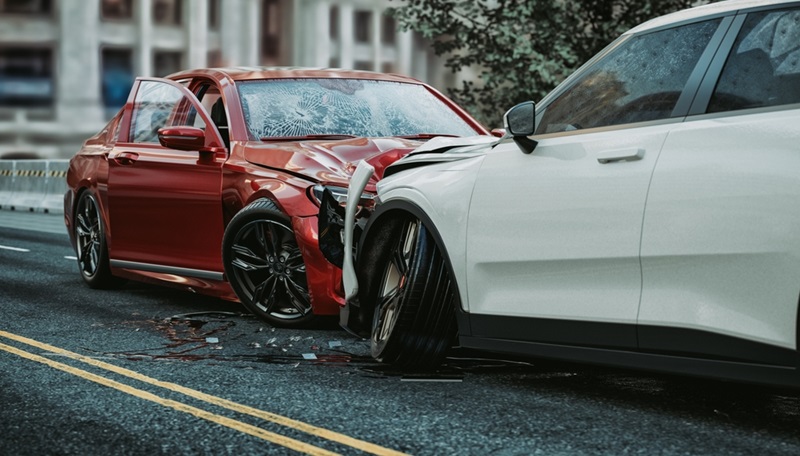
The Most Dangerous Times to Drive in Los Angeles for Car Accidents
You can’t always pick when you have to be on the road. But knowing when crashes spike in Los Angeles — and why — can help you drive more carefully during the riskiest stretches of the day and week. The data tells a clear story, and it isn’t always the hours you’d expect.
Crash risk in LA follows predictable rhythms tied to school schedules, commutes, weekend habits, late-night drinking, and our region’s occasional rain. This post breaks down those high-risk windows using real crash data, then explains how fault, comparative negligence, and insurance claims work in California if you’re hurt in one.
Here’s what you’ll learn:
- The most dangerous times to drive in LA, backed by crash data
- Why the afternoon school-pickup and commute overlap is so risky
- How late-night weekend hours and DUI raise the danger
- The hidden risks of early morning darkness and rainy-day driving
- How California fault, comparative negligence, and insurance claims work
- What to do if a crash leaves you injured
Let’s start with the time of day that stands out most.
The Afternoon Danger Zone: 3 to 4 p.m. in Los Angeles
If you had to name the single riskiest stretch of a typical LA weekday, the afternoon would top the list. Crash data points squarely at the hours between school pickup and the heart of the evening commute.
What the Data Shows
According to Mercury Insurance’s 2026 claims analysis, crash volume in Los Angeles County peaks between 3:00 and 3:10 p.m. on weekdays. That’s when school-pickup traffic collides with early commuters and errand-runners, packing the roads with stop-and-go congestion.
But volume isn’t the whole story. The highest-severity, injury-causing crashes happen a bit later — between 4:00 and 4:10 p.m. As traffic begins to open up and speeds climb, the crashes that do occur tend to be more serious. So the afternoon carries a one-two punch: the most crashes around 3 p.m., and the most damaging ones around 4 p.m.
Why This Window Is So Dangerous
Several pressures stack up in this short span:
- School pickup chaos. Parents merge in and out of school zones, often distracted and in a hurry.
- Early commuters. The first wave of workers heading home adds volume.
- Stop-and-go congestion. Sudden braking leads to rear-end collisions.
- Rising speeds after 3:30. As gaps open up, faster speeds turn fender-benders into injury crashes.
Takeaway: In LA County, crashes peak around 3 p.m., but the most serious injury crashes cluster near 4 p.m. — making the late afternoon the day’s riskiest stretch.
The National Picture: Late Afternoon Into Night
LA’s patterns don’t exist in a vacuum. National data confirms that the hours after work are dangerous across the board — and that the risk stretches well into the night.
The National Safety Council, analyzing federal crash data from 2024, found that:
- Fatal crashes peak from 4 p.m. to midnight.
- Nonfatal crashes peak between 4 and 8 p.m.
In other words, the afternoon commute kicks off a long danger window that doesn’t fully ease until late at night. For LA drivers, that means the risk you face at 4 p.m. doesn’t simply vanish at dinnertime — it carries forward through the evening, especially when fatal crashes are concerned.
Takeaway: Nationwide, fatal crashes peak from 4 p.m. to midnight and nonfatal crashes from 4 to 8 p.m. — confirming that the evening is a sustained high-risk period.
Weekends Shift the Risk to Midday
Weekends don’t follow the workweek’s rhythm, and neither do their crashes. Without structured commutes, the danger moves earlier in the day.
Crash data shows the most dangerous weekend window falls around noon to 1 p.m. That’s when lunch-hour errands, family outings, deliveries, and leisure trips all pile onto the roads at once. Traffic becomes less predictable than a routine commute, and that unpredictability raises the odds of a collision.
If you tend to think of weekends as lower-stress driving, midday is the time to stay especially alert. The roads may feel more relaxed, but the crash numbers say otherwise.
Takeaway: On weekends, peak crash risk shifts to midday — roughly noon to 1 p.m. — driven by errands and leisure travel rather than commutes.
Late-Night Weekend Hours and the DUI Factor
Some of the most devastating crashes happen when most of the city is asleep. Late on Friday and Saturday nights, the danger isn’t congestion — it’s impaired and drowsy driving.
After bars, parties, and nightlife wind down, more impaired drivers hit the road. The combination of alcohol, fatigue, darkness, and higher speeds makes these hours uniquely deadly, even though there are fewer cars out. National data backs this up: fatal crashes spike during evening and overnight hours, especially on weekends.
In a city like Los Angeles, with sprawling nightlife and long drives home, the risk of encountering a drunk driver climbs sharply after midnight on weekends. You can drive perfectly and still be hit by someone who shouldn’t be behind the wheel.
Takeaway: Friday and Saturday nights — especially after midnight — carry a high risk of DUI and drowsy-driving crashes, even with lighter traffic.
Early Morning Darkness
The pre-dawn hours bring their own quiet dangers. While the early morning generally sees the fewest crashes overall — the safest stretch is around 3 to 4 a.m., when roads are nearly empty — the crashes that do happen can be serious.
Darkness cuts visibility. Drivers heading to early shifts may be drowsy. Some impaired drivers from the night before are still on the road. And on poorly lit stretches, hazards appear with little warning. So while your odds of a crash are lower in these hours, the conditions can make any collision more dangerous.
Takeaway: Early morning has the fewest crashes, but darkness, drowsiness, and lingering impaired drivers can make the collisions that occur more severe.
Rainy-Day Driving in Los Angeles
Rain is rare enough in LA that many drivers never quite adjust to it — and that’s exactly the problem. The first rain after a dry spell can be especially treacherous, as oil and grime rise to the surface and make roads slick.
LA-specific risks on wet days include:
- Drivers who slow down too much, creating unpredictable traffic flow.
- Drivers who don’t slow down at all, hydroplaning or skidding.
- Reduced visibility from spray, fog, and glare.
- Longer stopping distances that catch tailgaters off guard.
Because the region sees so little rain, drivers often lack practice handling it. A modest storm that wouldn’t faze drivers elsewhere can trigger a wave of crashes across LA freeways and surface streets.
Takeaway: Rain — especially the first storm after dry weather — sharply raises crash risk in LA, where many drivers aren’t used to wet conditions.
How Fault Works in a California Car Accident
Knowing when crashes happen is one thing. Knowing what to do if you’re in one is just as important. In California, the question of who pays usually starts with fault.
California is an at-fault state. That means the driver responsible for a crash — and their insurance company — is generally liable for the resulting damages. To recover compensation, you typically need to show the other driver was negligent: that they failed to use reasonable care and that failure caused your injuries.
Fault often hinges on the kind of factors these dangerous time windows highlight:
- Distraction, like a parent texting during school pickup
- Speeding, common as afternoon traffic opens up
- Impairment, the hallmark of late-night weekend crashes
- Driving too fast for conditions, a frequent cause of rainy-day wrecks
Evidence like the police report, photos, witness accounts, and the timing and location of the crash all help establish who was at fault.
Takeaway: California is an at-fault state, so the negligent driver and their insurer are generally responsible for the damages they cause.
How California Comparative Negligence Applies
What if you were partly to blame? Maybe you were driving a little fast yourself when someone ran a light. In California, that doesn’t end your claim.
California follows pure comparative negligence. Under this rule, you can still recover even if you were partly at fault — your compensation is simply reduced by your percentage of blame. Say your total damages came to $100,000 and you were found 20% at fault while the other driver was 80% responsible. You could still recover $80,000.
This matters because insurers often try to shift blame onto you to shrink what they pay. An argument that you “should have braked sooner” doesn’t mean you have no case. The other driver’s larger share of fault can still account for a meaningful portion of your recovery.
Takeaway: Partial fault reduces your recovery in California; it rarely erases it — so don’t assume a shared-blame argument closes the door.
How Insurance Claims Work After an LA Crash
Once fault is in the picture, the insurance process begins — and it’s not always straightforward. Here’s the general path a claim follows in California.
After a crash, you typically file a claim with the at-fault driver’s insurance company, or sometimes your own, depending on the coverage involved. California requires drivers to carry minimum liability insurance, though those minimums are often far too low to cover serious injuries.
A few realities worth knowing:
- Insurers aim to pay less. The adjuster works for the insurance company, not for you. Quick, low settlement offers are common.
- Uninsured and underinsured drivers are a real problem. If the at-fault driver has little or no coverage, your own uninsured/underinsured motorist coverage may come into play.
- Documentation drives your claim. Medical records, the crash report, repair estimates, and proof of lost wages all shape what you can recover.
- Early statements can hurt you. What you say to an adjuster soon after a crash can be used to reduce your payout.
Because these dynamics tilt toward the insurer, having someone in your corner who understands them can make a real difference in the outcome.
Takeaway: California insurance claims often favor the insurer — strong documentation and an understanding of coverage limits protect what you’re owed.
A Composite Example: Meet Marcus
Marcus is not a real client. He’s a composite — a realistic blend of the kinds of cases we see — created to show how timing, fault, and a claim can come together.
Marcus was driving home through LA just after 4 p.m. on a Thursday. Traffic had started to loosen up, and speeds were climbing. As he slowed for a light, a driver behind him — glancing at a phone during the late-afternoon rush — failed to stop in time and slammed into the back of his car. Marcus suffered a neck injury and a concussion.
Here’s how his situation took shape:
- The timing fit the data. The crash happened in the 4 p.m. injury-peak window, when opening speeds turn rear-end hits serious.
- Fault pointed to the other driver. The police report, a witness, and the distracted-driving circumstances supported that the rear driver was negligent.
- A shared-blame argument surfaced. The insurer suggested Marcus braked abruptly, but under pure comparative negligence, even a small share of fault wouldn’t have erased his claim.
- Documentation mattered. His medical records, photos of the damage, and proof of missed work built the full picture of his losses.
No single fact decided Marcus’s case. It was the combination — clear evidence, a negligent driver, and thorough documentation — that gave him a path to recovery.
Takeaway: A crash during a known high-risk window can still come down to evidence, fault, and how well your losses are documented.
Why Choose Walch Law
A car crash can leave you with painful injuries, mounting bills, and an insurance company that’s quick to minimize what you’re owed. You shouldn’t have to fight that battle alone while you’re trying to heal.
At Walch Law, we help injured people and families across Los Angeles and throughout California pursue claims against those responsible for their harm. We investigate how the crash happened, establish fault, push back when insurers try to shift blame onto you, document the full scope of your losses, and fight to recover the compensation you deserve.
We work on a contingency fee basis. You pay nothing out of pocket, and we only collect a fee if we recover compensation for you. There’s no financial risk in finding out where you stand.
Get Your Free Consultation Today
If a crash hurt you on LA’s roads, here’s what to remember:
- Late afternoon is the riskiest weekday window — crashes peak around 3 p.m., and injuries near 4 p.m.
- Evenings, late-night weekends, and rainy days all carry elevated danger.
- California’s comparative negligence rule means partial fault usually reduces, not eliminates, your recovery.
- Insurance claims often favor the insurer, so strong documentation and guidance matter.
Contact Walch Law today for a completely free, confidential consultation. Tell us what happened, and we’ll give you an honest assessment of your case and the next steps that make sense for you.
Call today or reach out online to get started. 1-844-999-5342


Comments
There are no comments for this post. Be the first and Add your Comment below.