
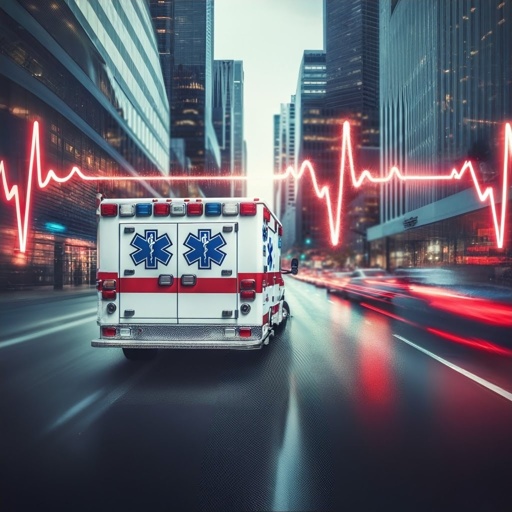
Three Most Common Accident Scenarios Involving a Paramedic Ambulance in California
You expect an ambulance to save lives — not to cause a crash that upends yours. But across Southern California, ambulances racing through busy intersections and crowded freeways are sometimes involved in serious accidents. If you were hurt in one, you may feel confused about who’s responsible and whether you can even sue an emergency vehicle. You can, in the right circumstances, and this post explains how.
We’ll walk through three common ambulance accident scenarios, who may be liable in each, how California’s emergency vehicle immunity law works and where it stops, and what you can recover.
Here’s what you’ll learn:
- The three most common ambulance crash scenarios
- Who may be at fault in each
- How Vehicle Code § 21055 immunity applies — and its limits
- What damages you can pursue and the deadline that matters
Let’s start with the crash most people picture.
Scenario 1: An Intersection Collision With an Ambulance Running Lights and Sirens
Picture this. You have a green light and enter a Los Angeles intersection. Suddenly an ambulance, lights flashing and siren blaring, crosses against its red light and strikes your car. It’s fast, violent, and terrifying — and it happens more often than you’d think.
These crashes are common because ambulances are legally allowed to bend certain traffic rules during emergencies. But that permission is not unlimited.
How Emergency Vehicle Immunity Applies
Under California Vehicle Code § 21055, an emergency vehicle responding to a call may run red lights, exceed the speed limit, and disregard some traffic laws — if it uses its siren when reasonably necessary and displays a red warning light visible from the front.
When those conditions are met, the ambulance driver receives a degree of immunity for the ordinary traffic violation. That’s why these cases feel confusing to victims.
Where the Immunity Stops
Here’s the crucial part: immunity is not a free pass. Under Vehicle Code § 21056, that protection does not shield an ambulance driver from the consequences of driving with reckless disregard for others’ safety.
So the central question becomes whether the driver acted reasonably. Did they slow before entering the intersection? Was the siren actually on? Did they give other drivers a fair chance to react? If not, the ambulance agency — often a public entity or private company — may be liable. An ambulance can legally run a red light, but immunity ends where reckless or unreasonable driving begins.
Scenario 2: A Rear-End Crash Caused by a Driver Failing to Yield to an Ambulance
Now flip the situation. An ambulance approaches from behind. One driver panics, slams their brakes, or stops suddenly in an odd spot. The car behind them can’t stop in time and rear-ends them. The ambulance never touched anyone — yet people are injured.
California law requires drivers to pull to the right and stop when an emergency vehicle approaches with lights and sirens. Confusion about that rule causes plenty of crashes.
Who May Be Liable Here
In this scenario, the ambulance is usually not at fault at all. Liability typically falls on the drivers involved.
- The driver who stopped abruptly or unpredictably may share fault for creating a hazard.
- The rear driver may share fault for following too closely or not paying attention.
California generally presumes the rear driver bears significant responsibility in a rear-end crash. But that presumption can shift when the lead driver behaved unreasonably in response to the ambulance.
Why Fault Often Gets Divided
Because both drivers may have contributed, these cases frequently involve shared blame. That’s where California’s fault rules become essential — which we’ll cover shortly. When drivers react badly to an approaching ambulance, fault usually lands on the motorists, not the ambulance itself.
Scenario 3: A Paramedic or Patient Injured Inside the Ambulance
The third scenario happens out of public view. A patient on a gurney, or a paramedic working in the back, is thrown during a sudden stop, sharp turn, or collision. Because people in the rear compartment often aren’t fully secured, even a moderate impact can cause serious harm.
These injuries fall into two general categories, depending on what caused them.
When Another Driver Is at Fault
If a negligent third-party driver hit the ambulance, that driver’s insurance is typically the first source of recovery. A patient or paramedic injured inside may file a claim against the at-fault motorist just like any other crash victim.
When the Ambulance Agency May Be Responsible
Sometimes the harm comes from within — an unsecured gurney, a driver braking too hard, or unsafe operation. In those cases, the ambulance agency may bear responsibility.
Paramedics injured on the job usually have workers’ compensation benefits available. But if a third party caused the crash, a separate claim against that driver may also exist, allowing recovery beyond what workers’ comp provides. People hurt inside an ambulance may have claims against a negligent driver, the ambulance agency, or both.
How Comparative Negligence Affects Your Recovery
Across all three scenarios, one rule shapes what you can recover: California’s pure comparative negligence system.
Under this rule, you can still recover compensation even if you were partly at fault. Your award is simply reduced by your percentage of blame. If you’re found 20% responsible, you can still recover 80% of your damages.
This matters enormously in ambulance cases, where fault is often divided among multiple parties. An insurer may try to pin blame on you to shrink its payout. Don’t assume that means your claim is over — even partial fault leaves a real path to recovery. Being partly at fault doesn’t bar your claim; it only reduces it under California law.
A Note on Suing Public Agencies
Many ambulances are operated by public entities like a city or county fire department. If a government agency may share responsibility, a special rule applies.
Claims against a public entity usually require a formal government claim within just six months of the incident — far shorter than the standard deadline. Miss that window, and you can lose your right to pursue that agency entirely.
Because it’s often unclear at first whether a public or private operator was involved, acting quickly protects your options. If a public ambulance agency may be liable, a six-month claim deadline may apply — so act fast.
What Damages You Can Pursue- How Much is Your California Ambulance Crash Worth?
A California ambulance crash can leave you with far more than a repair bill. Under California law, an injured person can generally seek compensation for the full scope of the harm, which may include:
- Medical expenses — emergency care, surgery, imaging, and future treatment
- Lost wages — income missed during recovery
- Lost earning capacity — reduced ability to work going forward
- Pain and suffering — the physical and emotional toll of the crash
- Property damage — repair or replacement of your vehicle
- Emotional distress — anxiety, trauma, and related harm
The severity and permanence of your injuries tend to shape what a claim is worth. Serious, lasting harm carries weight the law recognizes. Your claim can cover medical costs, lost income, pain and suffering, and more — not just vehicle repairs.
The California Deadline You Can’t Afford to Miss
California sets a firm time limit on these claims. Under the statute of limitations, you generally have two years from the date of the crash to file a personal injury lawsuit. Miss that window, and you can lose your right to compensation entirely — no matter how strong your case might be.
Remember, too, that a shorter six-month deadline may apply if a public ambulance agency is involved. That’s exactly why prompt action matters so much in these cases.
Acting early also protects your evidence. Dispatch records, siren-use data, dashcam footage, and witness accounts can fade or be overwritten quickly. If an ambulance crash hurt you, save the police report, photos, and medical records now — and treat both deadlines as already running. You generally have two years to file, but a six-month government deadline may apply — so don’t wait.
Get Your Free Consultation Today
Being hurt by the very vehicle meant to help people is disorienting and unfair. You shouldn’t have to untangle immunity laws and short deadlines alone while you’re trying to heal. Here’s what to remember:
- Three common scenarios — intersection collisions, rear-end crashes from failing to yield, and injuries inside the ambulance.
- Immunity has limits — Vehicle Code § 21055 doesn’t protect reckless driving.
- Comparative negligence means partial fault won’t bar your claim.
- Deadlines are firm — two years generally, and possibly six months against a public agency.
At Walch Law, we help injured people across Southern California — Los Angeles, Orange County, Riverside, San Bernardino, and beyond — investigate how their crash happened, identify every responsible party, and pursue the full compensation the law allows. We move quickly to preserve dispatch logs, siren records, and other time-sensitive evidence.
We work on a contingency fee basis. You pay nothing out of pocket, and we only collect a fee if we recover compensation for you. There’s no financial risk in finding out where you stand.
Contact Walch Law today for a completely free, confidential consultation. Tell us what happened, and we’ll give you an honest assessment of your situation and the next steps that make sense for you.
Call today or reach out online to get started. 1-844-999-5342


Comments
There are no comments for this post. Be the first and Add your Comment below.